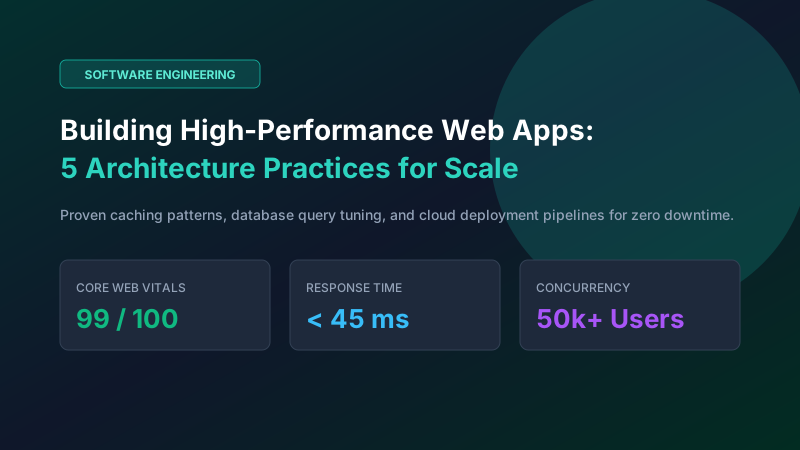
Speed is one of the most critical factors influencing user retention and SEO ranking. Research shows that every 100-millisecond delay in page load time can reduce conversion rates by up to 7%. Here are 5 foundational engineering practices we apply to every client web application.
1. Server-Side Rendering (SSR) and Edge Caching
By pre-rendering pages on the server with Next.js or ASP.NET Core, users receive fully formed HTML immediately. Distributing static assets via Content Delivery Networks (CDNs) ensures visitors around the globe load your website in under a second.
2. Optimized Database Indexing & Connection Pooling
Slow database queries are the #1 killer of web application performance. Utilizing compound indexes in PostgreSQL, optimizing ORM queries to prevent N+1 issues, and leveraging Redis caching drastically reduces database CPU strain.
3. Modular Component Design & Lazy Loading
Split your application code into independent, lazy-loaded bundles so that browsers only download the Javascript required for the immediate screen.
4. Type Safety and Automated Testing
TypeScript on the frontend and C# on the backend catch syntax and type errors at compile time before they ever reach production users.
5. Continuous Integration and Blue/Green Deployments
Automated deployment pipelines run regression tests, security scans, and build checks automatically on every code commit, eliminating deployment downtime.